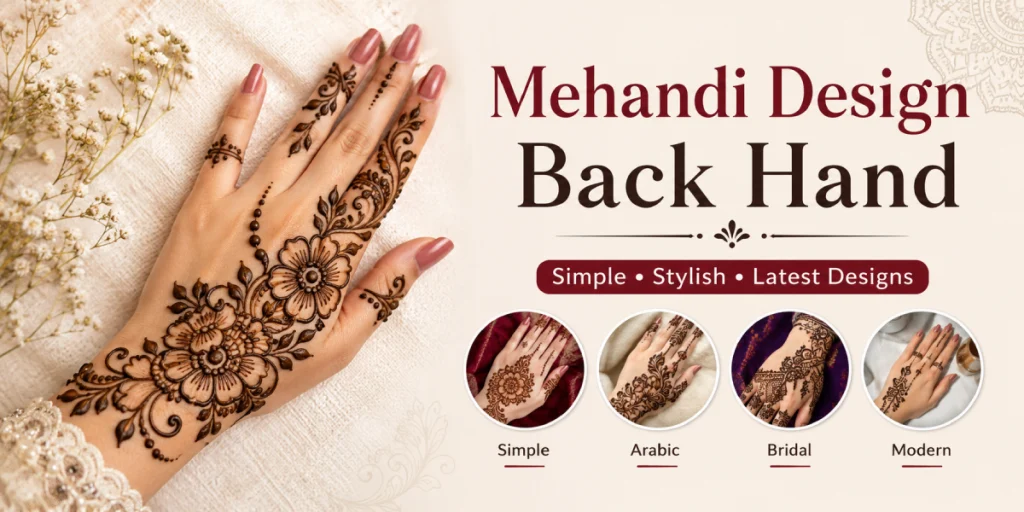
A beautiful mehndi pattern can make your hands look attractive for festivals, weddings, family functions, and other special occasions. A Mehandi Design Back Hand can be simple, traditional, or modern, depending on your personal style. Some people prefer small floral patterns, while others like detailed Arabic designs that cover the fingers and wrist.
There are many designs to choose from, whether you are a beginner or someone who enjoys detailed mehndi art. The right pattern depends on the occasion, the time available, and how much of your hand you want to cover.
Popular Mehandi Design Back Hand Ideas
There are several styles of back-hand mehndi designs for different tastes and occasions. Floral patterns are popular because they look graceful and can be combined with leaves, dots, and curved lines. Arabic designs often feature bold flowers and flowing patterns with open spaces.
Traditional Indian easy mehandi designs include paisley shapes, peacocks, and detailed motifs. Modern designs use geometric shapes, fine lines, and minimal patterns. You can also choose bracelet-style mehndi that looks like jewellery around the wrist. Exploring different styles can help you find a pattern that matches your outfit and the event.
Simple Mehandi Design Back Hand for Beginners
Simple designs are a good choice for beginners who want an attractive pattern without spending too much time. You can start with a small flower in the centre of the hand and add leaves, dots, and curved lines around it.
Another easy option is to create a pattern that starts at the wrist and moves towards the middle finger. Finger rings, small petals, and thin lines can make the design look complete without covering the entire hand.
These patterns are suitable for festivals, casual gatherings, and family events. They are also easier to practise at home because they do not require complicated shapes or detailed shading.
Arabic Mehandi Design for the Back Hand
Arabic mehndi designs are known for their bold flowers, leafy trails, and flowing patterns. They often move diagonally across the back of the hand, creating an elegant look without filling every space.
You can choose a large flower near the wrist and connect it to smaller flowers and leaves towards the fingers. Another option is to create a curved vine along one side of the hand.
Arabic designs work well for weddings, Eid, Karwa Chauth, and other celebrations. They are suitable for people who want a stylish pattern that looks detailed but still leaves some skin visible between the motifs.
Bridal and Traditional Back Hand Mehndi Designs
Bridal mehndi designs usually contain more detail than everyday patterns. They may include paisley shapes, peacocks, mandalas, flowers, and fine lines arranged closely together. Some brides choose designs that extend from the fingertips to the wrist or forearm.
Traditional patterns can also include decorative elements inspired by Indian culture. You may choose matching designs for both hands or use a similar theme with slightly different patterns.
When selecting bridal mehndi, consider your wedding outfit, jewellery, and personal preference. Detailed patterns can take longer to apply, so it is helpful to plan the design in advance and allow enough time for application and drying.
Modern and Minimal Back Hand Mehndi Designs
Modern mehndi designs are ideal for people who prefer clean and simple patterns. Popular choices include thin geometric lines, small flowers, finger-focused designs, and bracelet-style patterns.
You can also choose a single central motif with delicate lines extending towards the fingers. Minimal patterns are suitable for parties, college functions, casual gatherings, and smaller celebrations.
A stylish back-hand pattern does not always need to cover the whole hand. Sometimes, a few carefully placed details can create an elegant appearance. Choose a design that feels comfortable and matches your personal style.
How to Choose the Right Back Hand Mehndi Design?
Before choosing a design, think about the occasion and the amount of time available. A simple floral or leafy pattern may be enough for a small gathering, while a wedding may call for a more detailed design.
Consider the size of your hand and the placement of the pattern. Long, flowing designs can draw attention towards the fingers, while central flowers and mandalas create a focal point on the back of the hand.
You should also consider your outfit and accessories. A minimal design may complement heavy jewellery, while a detailed pattern can work well with a traditional outfit. Looking at reference images before applying mehndi can help you decide which style suits you best.
Tips to Make Your Back Hand Mehndi Look Beautiful
- Wash and dry your hands before applying mehndi.
- Use a fresh cone and practise basic shapes first.
- Let the paste dry naturally and follow aftercare instructions.
- Allow 24–48 hours for the stain to develop.
- Avoid peeling off the paste before it comes away naturally.
- Choose products with listed ingredients and avoid black henna containing PPD.
Frequently Asked Questions
Which back-hand mehndi design is best for beginners?
Simple flowers, leaves, dots, and curved lines are good options for beginners. These patterns are easy to practise and can look attractive without complicated details.
Which mehndi design looks best on the back hand?
Arabic, floral, traditional Indian, and bracelet-style designs are popular choices. The best option depends on your occasion and personal preference.
How can I make my back-hand mehndi darker?
Let the paste dry naturally and follow suitable aftercare instructions. The stain develops over time, but its final colour depends on factors such as skin type, henna quality, and application.
Can I apply back-hand mehndi at home?
Yes, you can apply back-hand mehndi at home using a mehndi cone and a simple design. Start with flowers, leaves, and dots, and practise on paper before applying the pattern to your hand.